Temporary forever, or is Southbank simply unplanned?
In Southbank, we are no strangers to plans. Masterplans. Structure plans. Consultations. Strategies.
On paper, you would think our precinct is one of the most carefully considered in Melbourne.
But after more than a decade of discussion, consultation and “visioning”, a more uncomfortable question continues to linger: Do we actually have a plan at all?
This is not a new question.
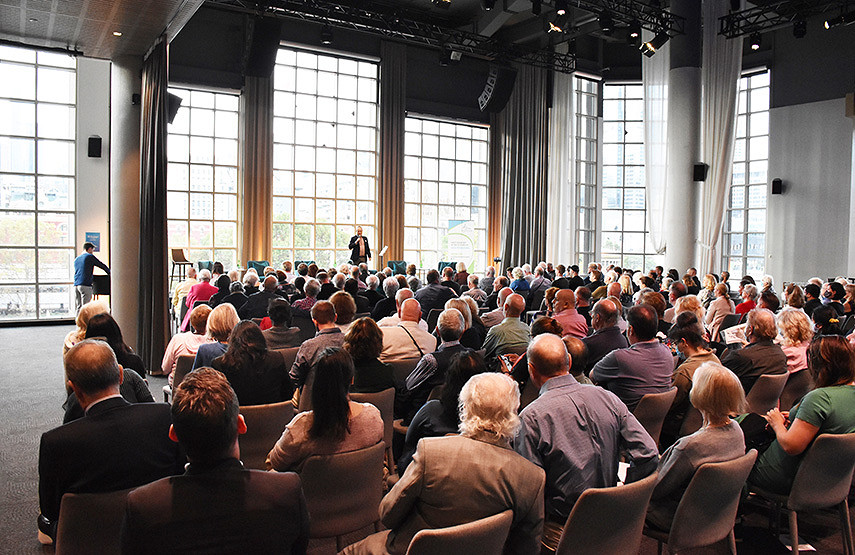
It was raised back in 2021 at the Southbank: Where to From Here? community forum, hosted by the Southbank Residents’ Association (SRA).
At the time, the intent was simple – bring together the council, planners and the community to discuss the future of Southbank, anchored around the 2010 Southbank Structure Plan. What emerged from that forum, however, was something far more concerning.
The 2010 plan – once intended to guide Southbank’s long-term growth – was no longer a living document. It had not been meaningfully updated, and much of what it set out to achieve had either not been delivered or had been overtaken by events.
In practical terms, that left Southbank – one of Melbourne’s most densely populated precincts – operating without a current, guiding plan. And here we are in 2026 … still asking the same question.
Because once you understand that a lot of what we see around us begins to make sense.
It explains why the City Road Masterplan has now sat in limbo for close to a decade.
It explains why consultations, such as the recent Normanby Rd open space project, can feel disconnected from any broader vision.
And it explains why so many outcomes in Southbank are framed as “temporary” – because without a clear long-term framework, temporary becomes the default.
But there is another layer to this – one that residents experience every day.
Too many of Southbank’s key projects are not just delayed – they are dependent on other projects to proceed …
Stage 6 of Southbank Boulevard; the long-awaited Southbank Promenade upgrade; public realm improvements tied to the redevelopment of the Southgate and Esso sites.
Each one is linked, either directly or indirectly, to something else happening first.
In theory, that coordination makes sense. But in practice, it creates a bottleneck.
Because when one project stalls – whether due to shifting timelines, commercial decisions, or broader economic conditions – everything around it stalls as well.
And over time, what was once framed as sequencing begins to feel like inertia.
For residents, this doesn’t present as a carefully staged delivery program. It presents as projects that never quite start.
As timelines that quietly slip. As promises that are made but not realised. And ultimately, as a precinct that feels like it is constantly waiting.
Waiting for the next stage.
Waiting for the next approval.
Waiting for something else to happen first.
But Southbank cannot afford to be a precinct that is always waiting.
Because when projects are assessed one by one – and then tied to other projects that may or may not proceed – the bigger picture is lost.
We see this most clearly in discussions around open space. While individual projects promise improvements, the broader reality is more complex, with gains in one area often offset elsewhere.
Without a clear, current plan tying these decisions together – and without the ability to deliver projects independently where needed – it becomes difficult to answer a simple question:
Are we actually moving forward?
To the council’s credit, there have been signs of recognition. Commitments to review past strategies and reassess priorities are steps in the right direction. But review must lead to reset.
Because Southbank is no longer an emerging precinct. It is established, dense, and under increasing pressure. Decisions made today will shape how tens of thousands of residents live, move and interact with their environment.
We are not asking for perfection. But we are asking for direction.
A clear, current plan. One that reflects the reality of Southbank today – not the assumptions of 2010. One that actively guides decisions, rather than being held back by dependencies that may never resolve.
Because without that, we will continue down the same path: Plans without delivery; projects without context; and “temporary” solutions that quietly become permanent.
The real concern is this: We identified this problem in 2021. Five years on, we are still living it.
And until that changes, Southbank won’t be shaped by design – it will be shaped by default.